Soundsphere
- My Role
- Product Designer
- Scope
- Research, Product Thinking, UI
- Timeline
- 4 Weeks
- Status
- Exploratory Concept
Overview
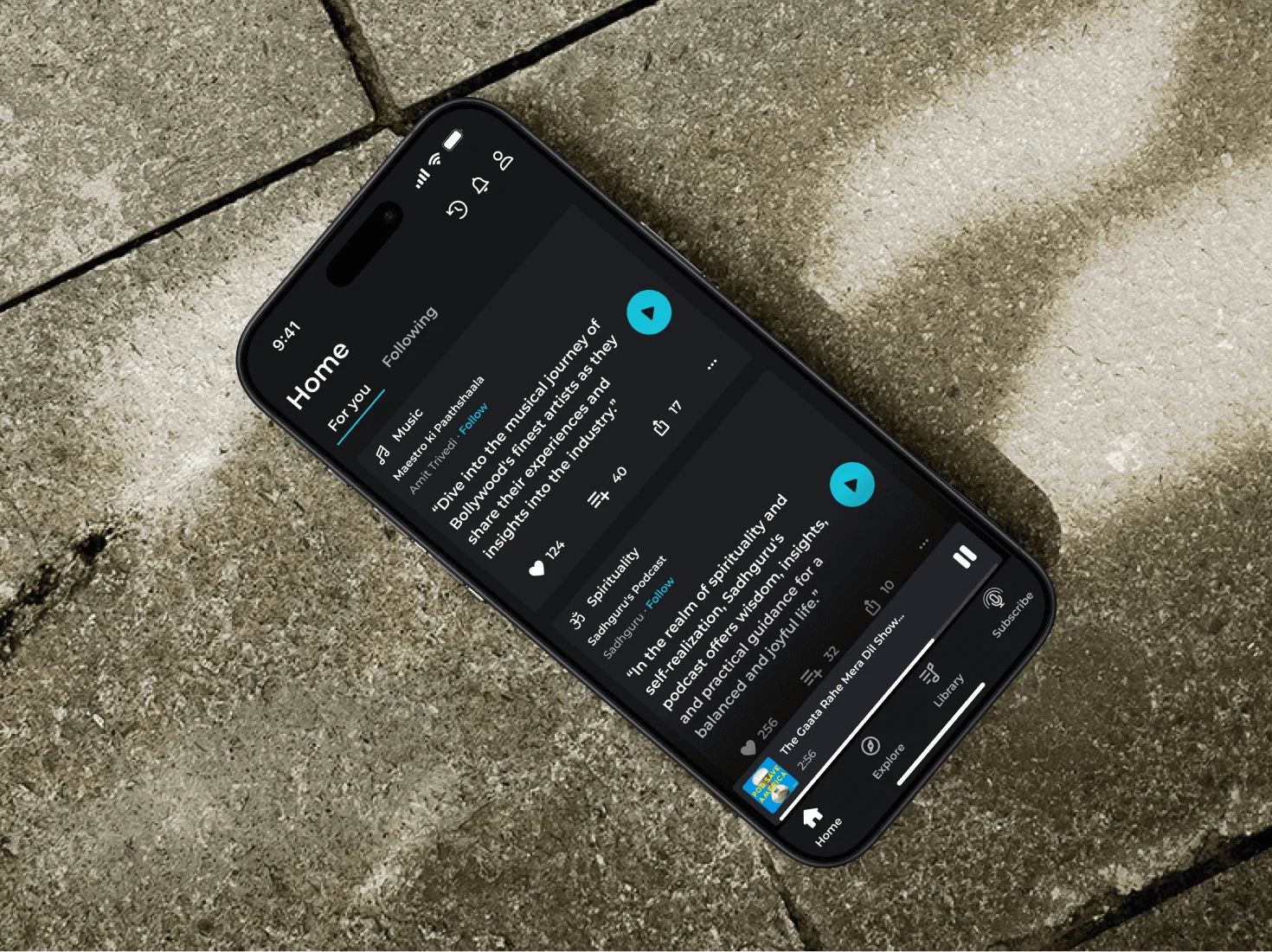
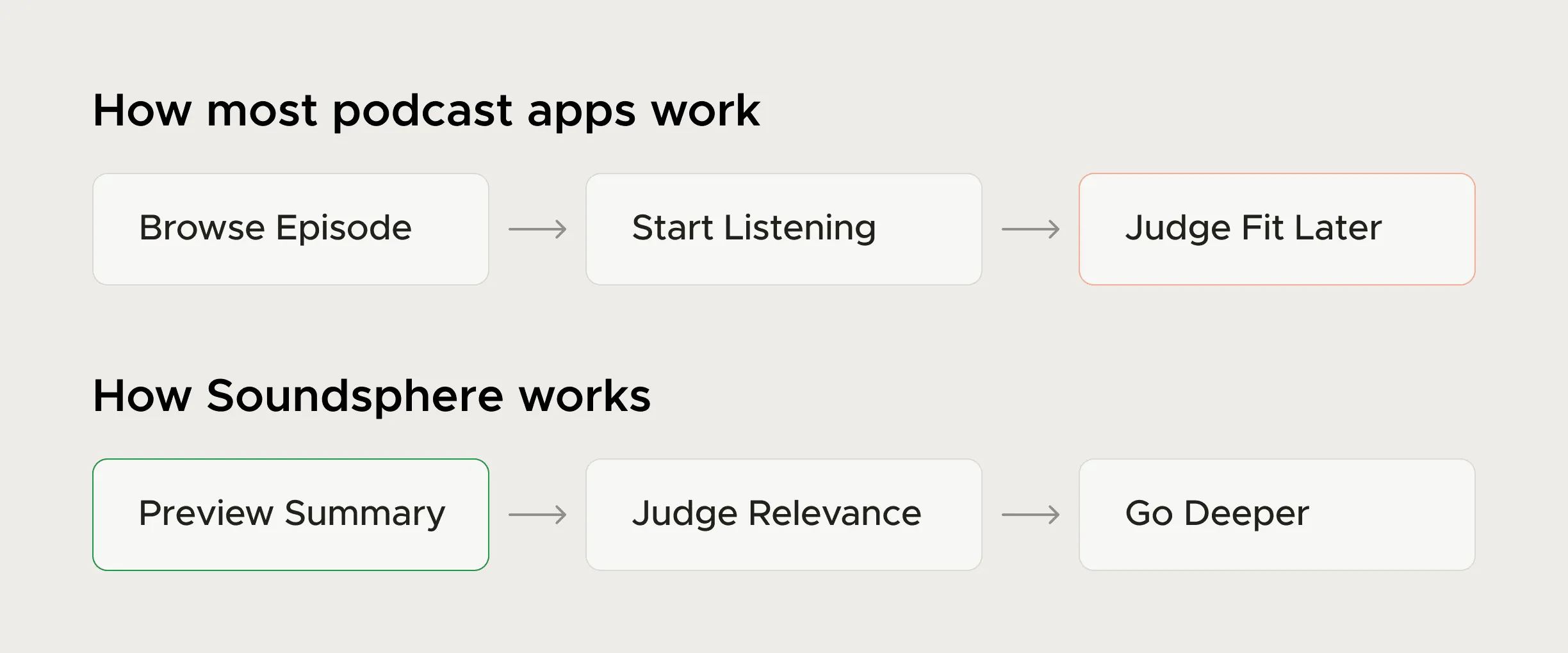
Soundsphere is a new entry point into long-form audio. SoundSphere is a concept podcast app built around a simpler question: what if users could judge the value of an episode before committing to the full listen?
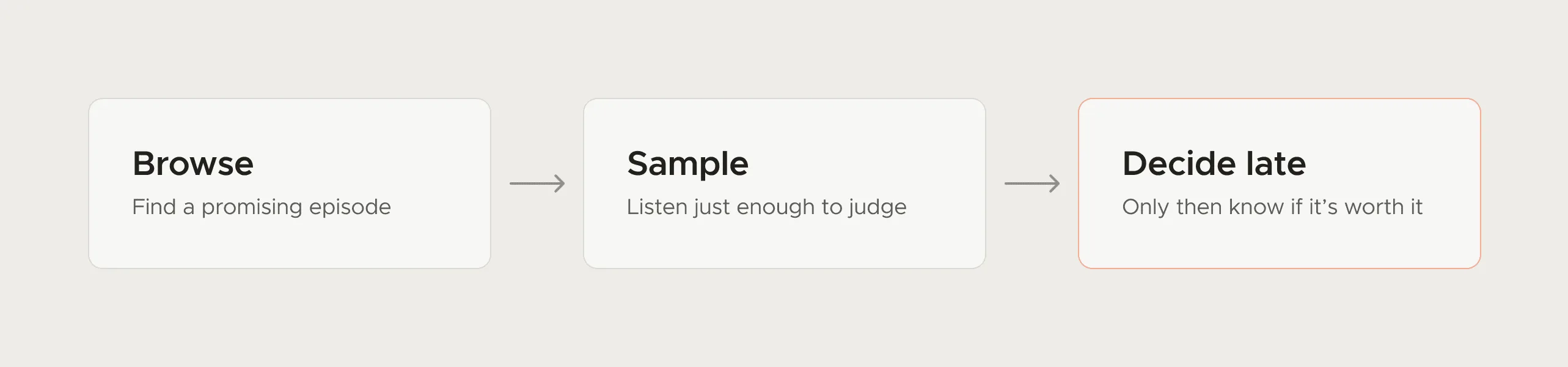
The current listening loop
Finding podcasts is easy. Knowing which one is worth the time isn't. Users still have to sample episodes manually just to judge relevance, making discovery feel more like trial and error than confident choice.
Research Signals
To validate the problem, I looked at how people currently discover and decide on podcasts, through interviews and usage patterns. A few clear signals kept repeating.
- I don't know if it's worth starting.: Relevance is unclear before listening
- Sampling is the default behavior: Users listen briefly, skip and move on
- Length increases hesitation: Long episodes raise the cost of trying
- Users judge with weak signals: Titles, thumbnails & descriptions rarely reveal enough
Opportunity Space
- Podcast libraries are growing faster than users can meaningfully browse
- Most discovery still relies on title, cover art, and duration
- Long-form audio has high intent, but weak entry points for low-attention users
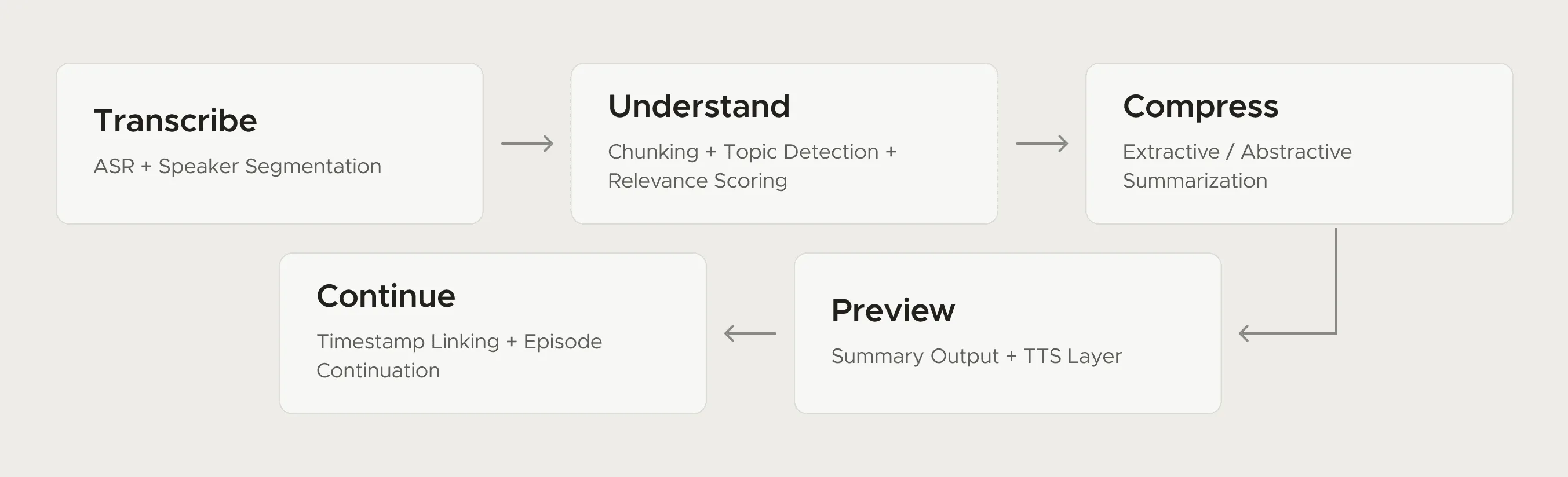
How the AI layer could work
The goal wasn't just to shorten podcasts, but to preserve meaning while reducing the effort to evaluate them.
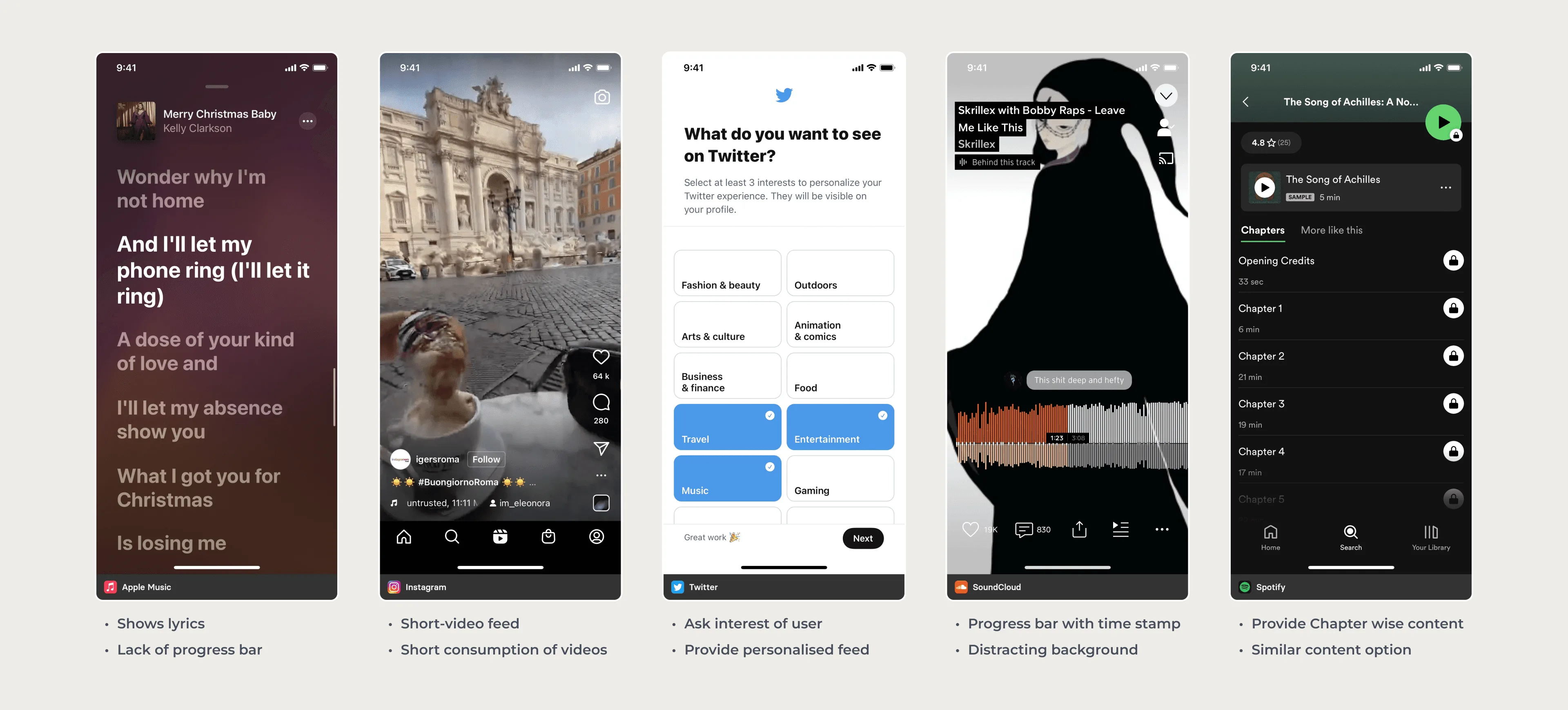
What I borrowed from existing behaviors
Rather than redesigning podcast listening from scratch, I looked at interaction patterns users already understand across audio, short-form and content discovery products.
Designing the experience
The product was designed to help users decide earlier, without making long-form audio feel shallow.
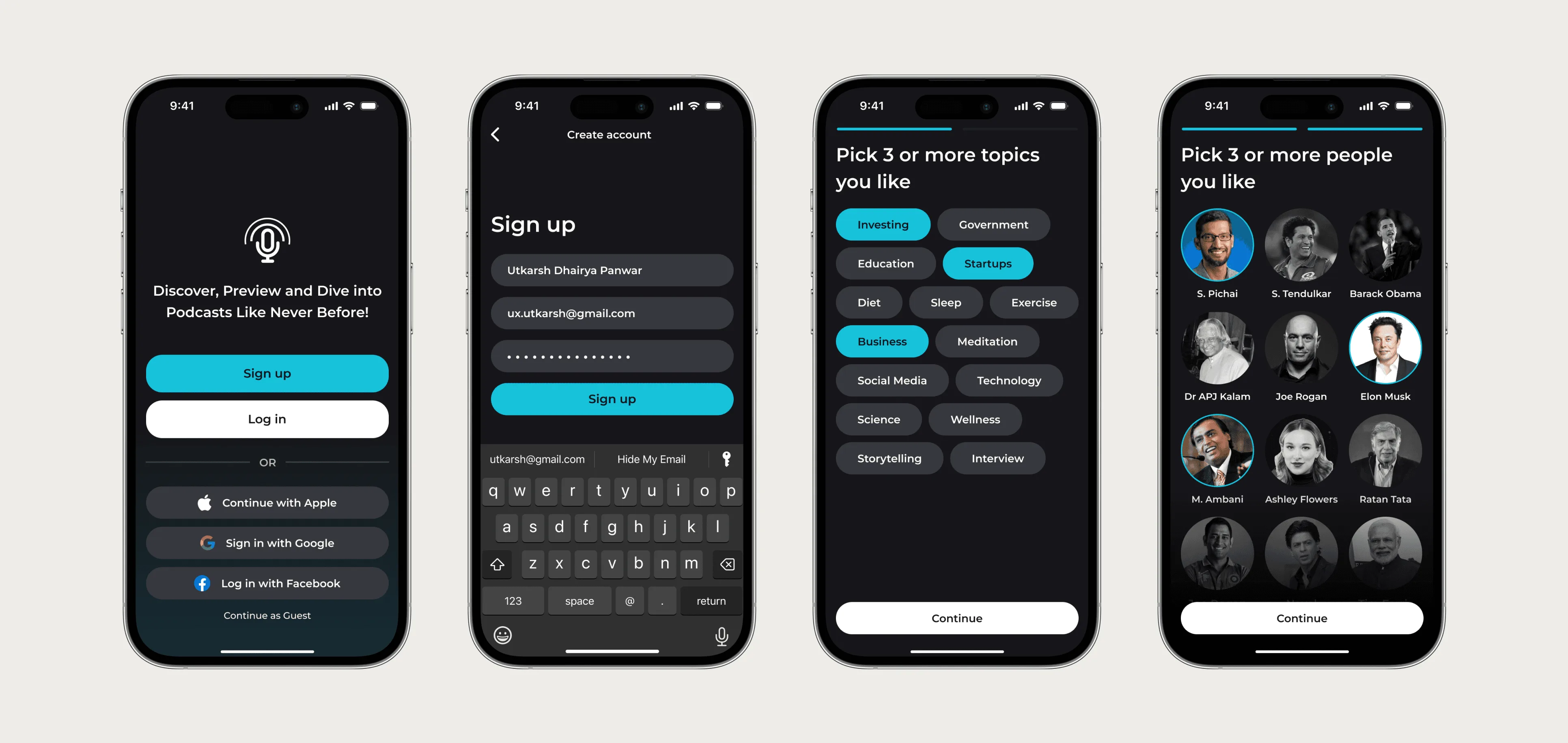
Reducing friction before relevance
The onboarding flow was designed to keep first-time entry lightweight, with guest access and quick preference signals to make the initial feed feel more relevant from the start.
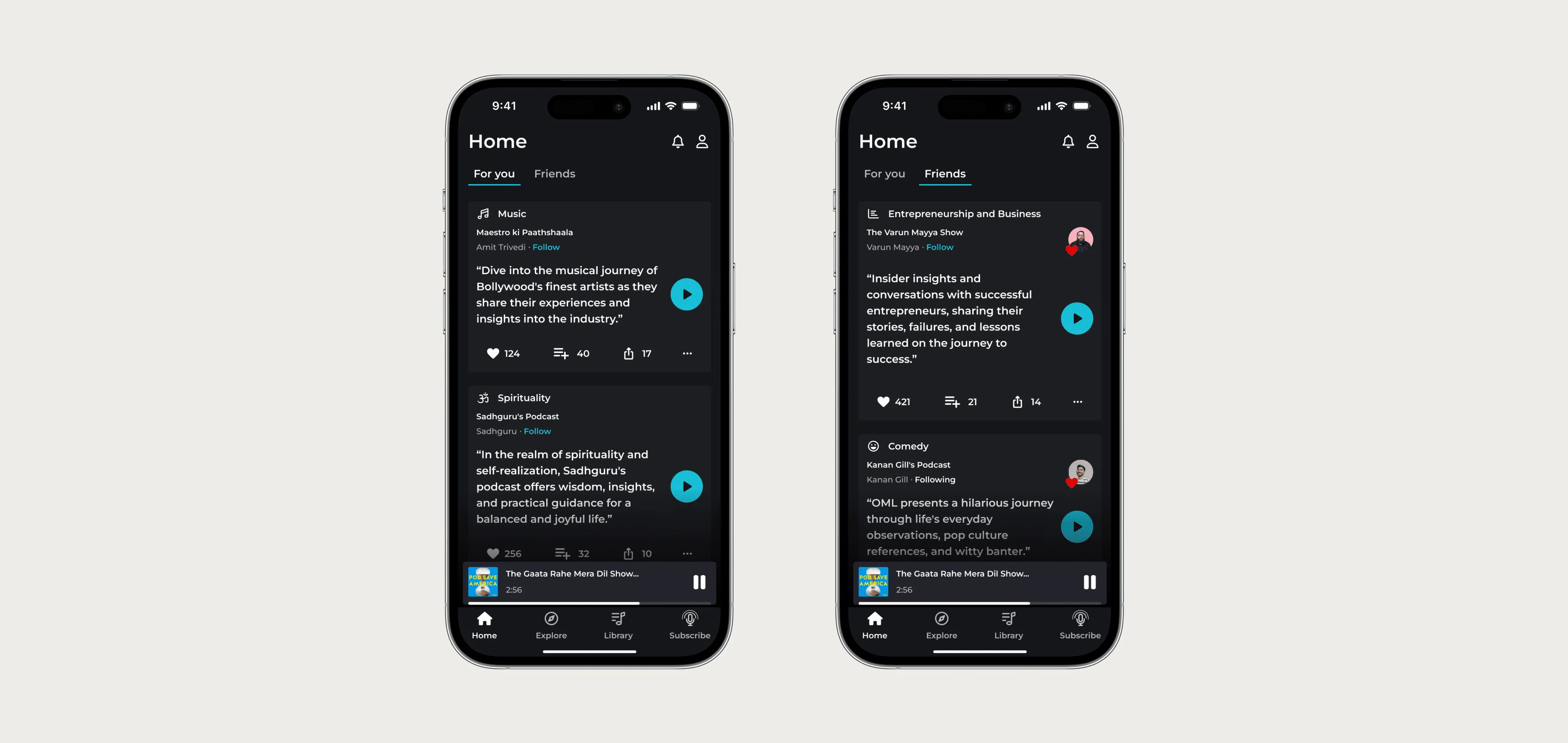
Designing a feed that helps users decide faster
The feed was split into a relevance-driven “For You” view and a socially aware “Friends” view, helping users discover content through both personal fit and trusted listening signals.
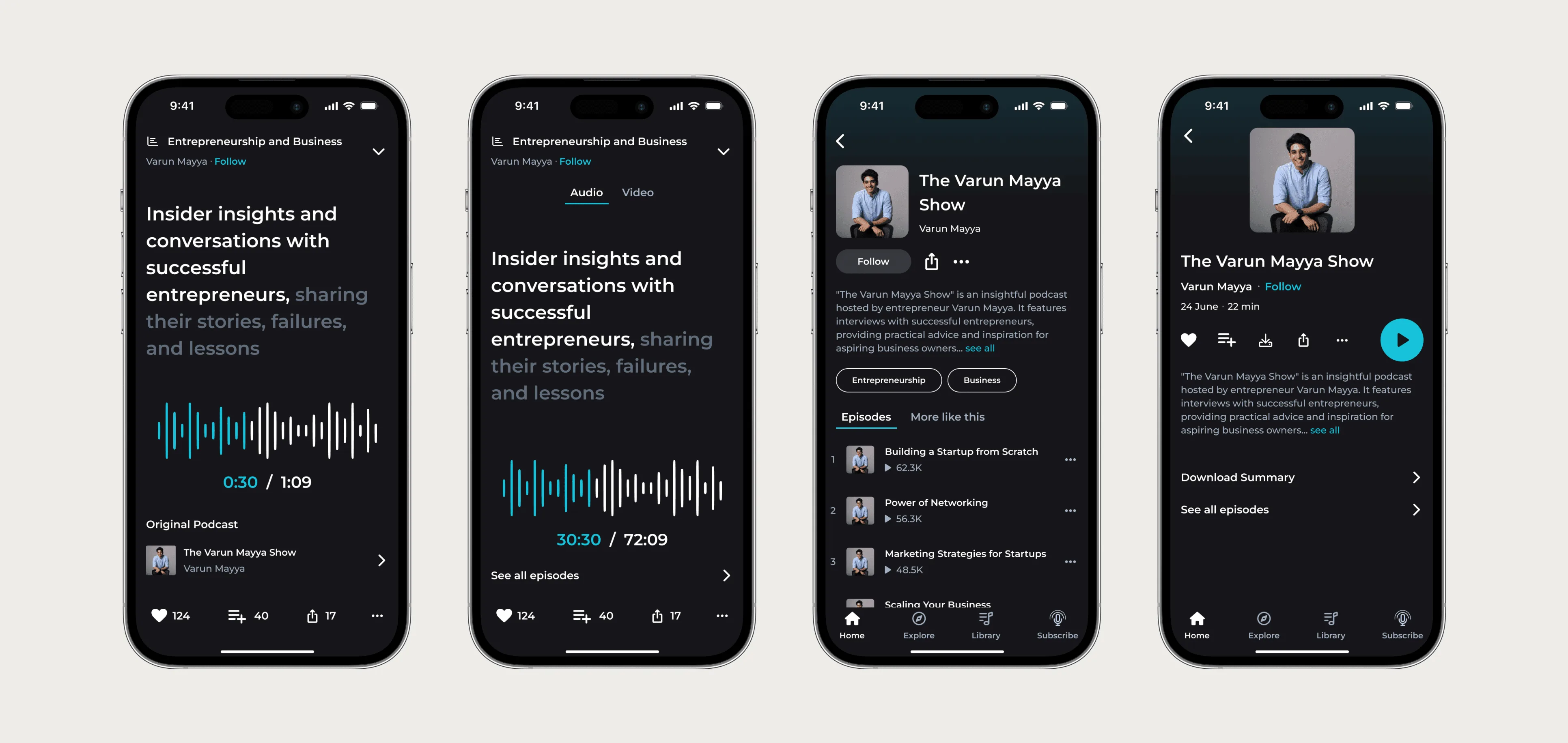
Turning summaries into a real listening mode
Instead of treating summaries as supporting text, the product introduces them as a short listening layer, giving users a quicker way to understand the episode before moving into the full conversation.
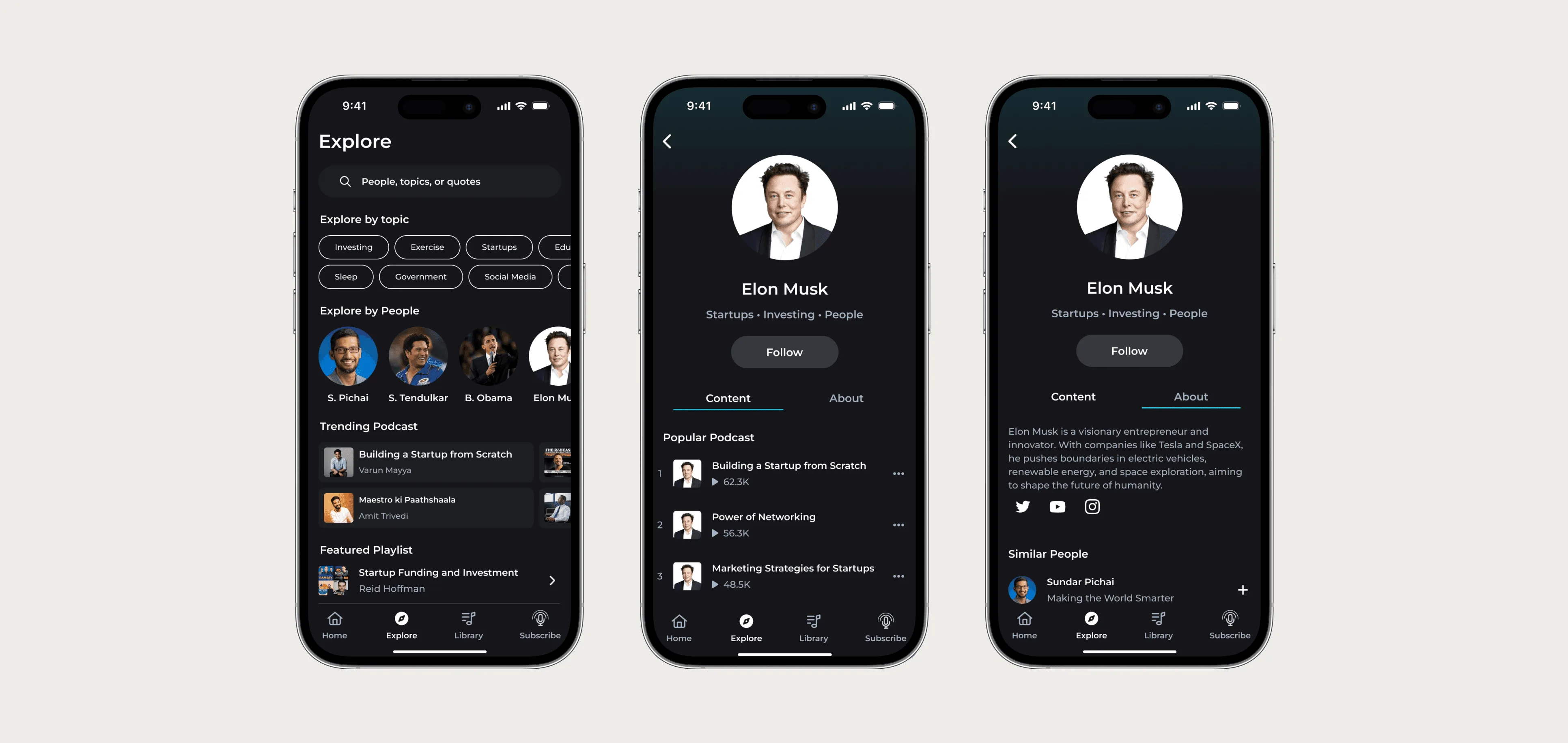
Expanding discovery beyond the feed
Discovery was designed to work beyond passive scrolling, through topics, trending content, featured playlists, and people users may want to follow over time.
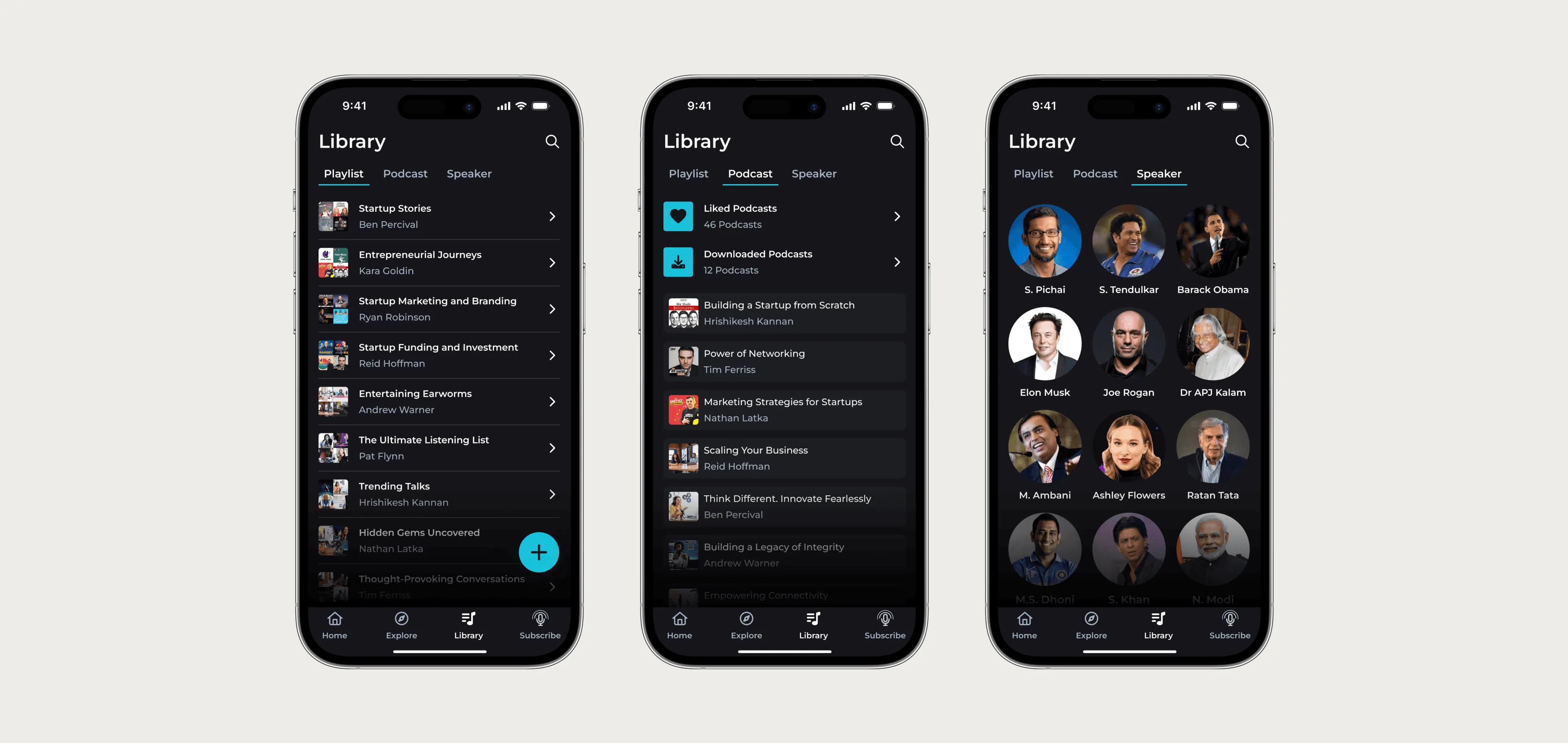
Building a system users can return to
The library was designed to support continuity, giving users one place to revisit saved playlists, downloaded episodes, followed speakers, and listening paths they want to return to.
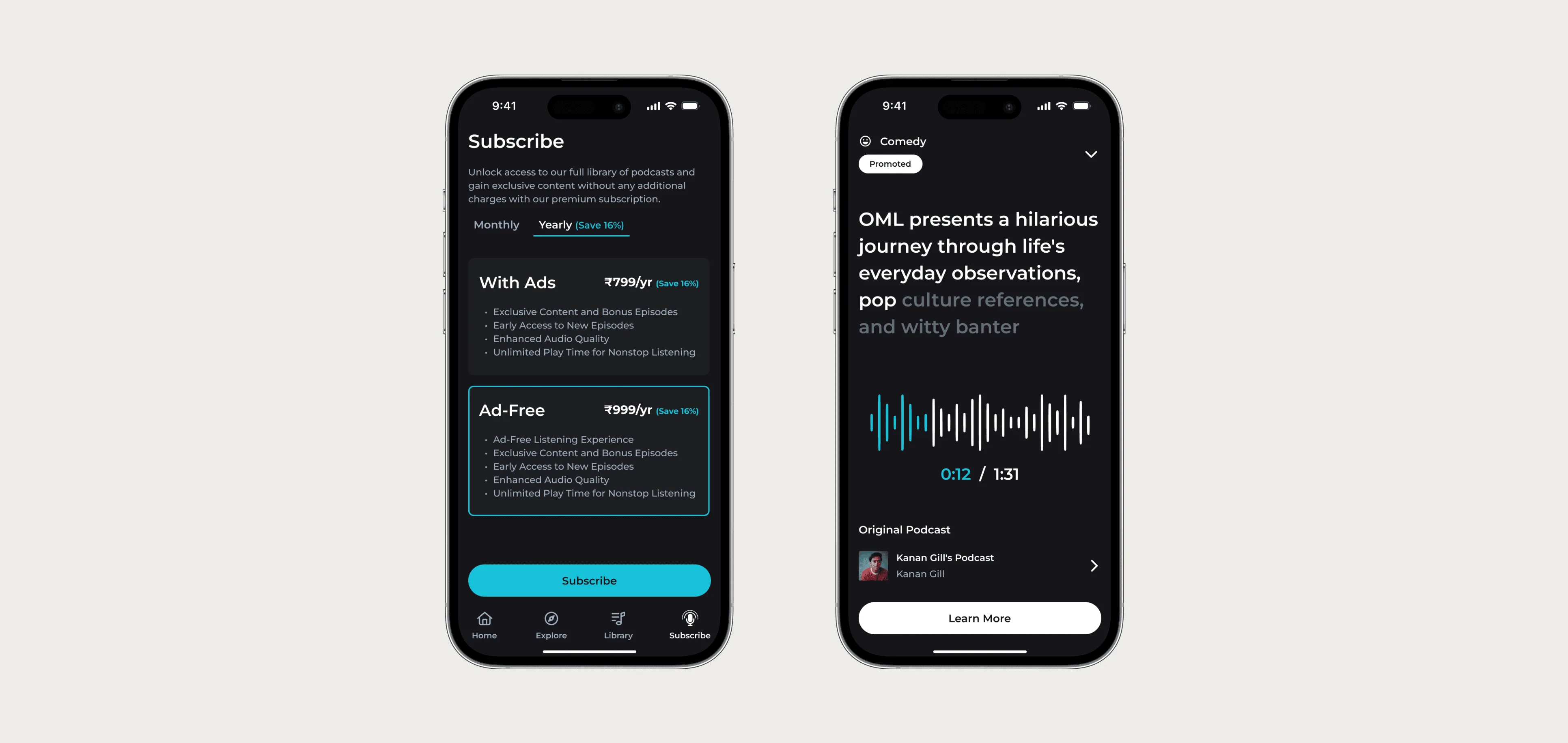
Monetizing without breaking the listening flow
The business model explores a paid listening product with both ad-supported and ad-free tiers, while also creating room for promoted podcast placements inside discovery without overwhelming the core experience.
What this concept would need next
The next step would be validating whether summary-first listening actually helps users decide faster, without reducing the depth that makes podcasts worth listening to.
- Better starts: Do clearer previews increase episode starts?
- Deeper listening: Do summaries lead users into full episodes?
- Trustworthy compression: How short can a summary be before it loses meaning?
- Creator value: Can this improve discovery without hurting original content?
Not every podcast needs to be shorter. But it need a better first step.
Next case study: <a href="/work/codeant-ai">Next Case Study</a>