SaaS onboarding and activation UX audit
Service · Updated
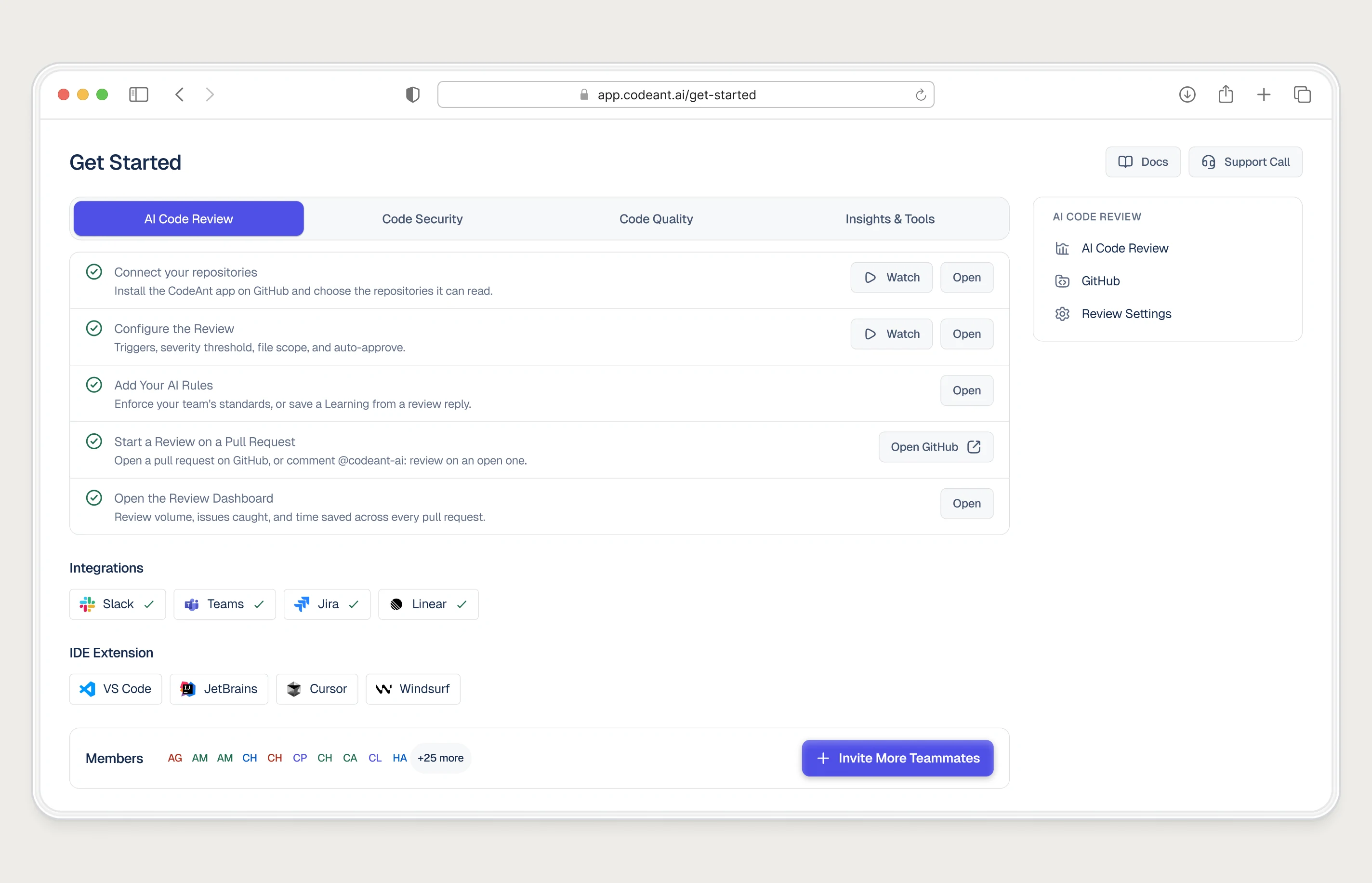
My SaaS onboarding audit is a fixed-scope review of the path from sign-up to first value. Over about two weeks you get an annotated flow map, fixes ranked by impact and effort, and redesigns of the worst screens. It builds on the activation work that doubled trial-to-paid at CodeAnt AI.
What the audit covers
Everything between "create account" and the moment a user gets what they signed up for. The rest of the product and the marketing site stay out, and that narrow scope is why two weeks is enough.
- Sign-up and authentication, including SSO and invite links.
- Integration and permission steps: OAuth scopes, admin installs, API keys, anything that needs someone else's approval.
- First run: empty states, sample data, the setup checklist if there is one.
- The first success moment, and whether the product tells users they've reached it.
- Trial emails and in-product nudges, and whether they react to what each user has done.
- The upgrade moment at the end of the trial.
From you I need product access, whatever funnel data you have (even a rough export), a sample of recent support tickets about setup, and 30 minutes with whoever owns onboarding.
Deliverables
- An annotated flow map: every screen and email in order, with your drop-off numbers on it where data exists and my notes where it doesn't.
- A prioritised fix list. Each issue gets an impact and effort rating and a one-line reason, so you can argue with the ranking instead of taking it on trust.
- Redesigns in Figma of the screens with the biggest drop-off, usually two or three.
- A recorded walkthrough of the findings, so people who missed the review call get the reasoning too.
What it doesn't include: building the fixes, A/B testing them, or redesigning the rest of the product. If you want that afterwards, it becomes a sprint.
How the two weeks run
- Days 1 to 2: access and data: Kick-off call, a read through the funnel and support tickets, and agreement on which activation event the audit measures against.
- Days 3 to 5: go through it as several users: Fresh accounts as an admin, as a non-admin invited by a teammate, and as someone who signed up alone. Most of the surprises turn up on the non-admin path.
- Days 6 to 9: rank and redesign: I score the issues, pick the top screens and design them. A mid-point check-in means nothing in the final review comes as a surprise.
- Day 10: review: A live walkthrough of the map, the fix list and the redesigns, plus the recording.
What this found at CodeAnt AI
The flow looked complete on paper. The non-admin walkthrough showed why trials stalled at connecting a repo: installing the GitHub app on the company org needed admin rights, and the person signing up usually didn't have them.

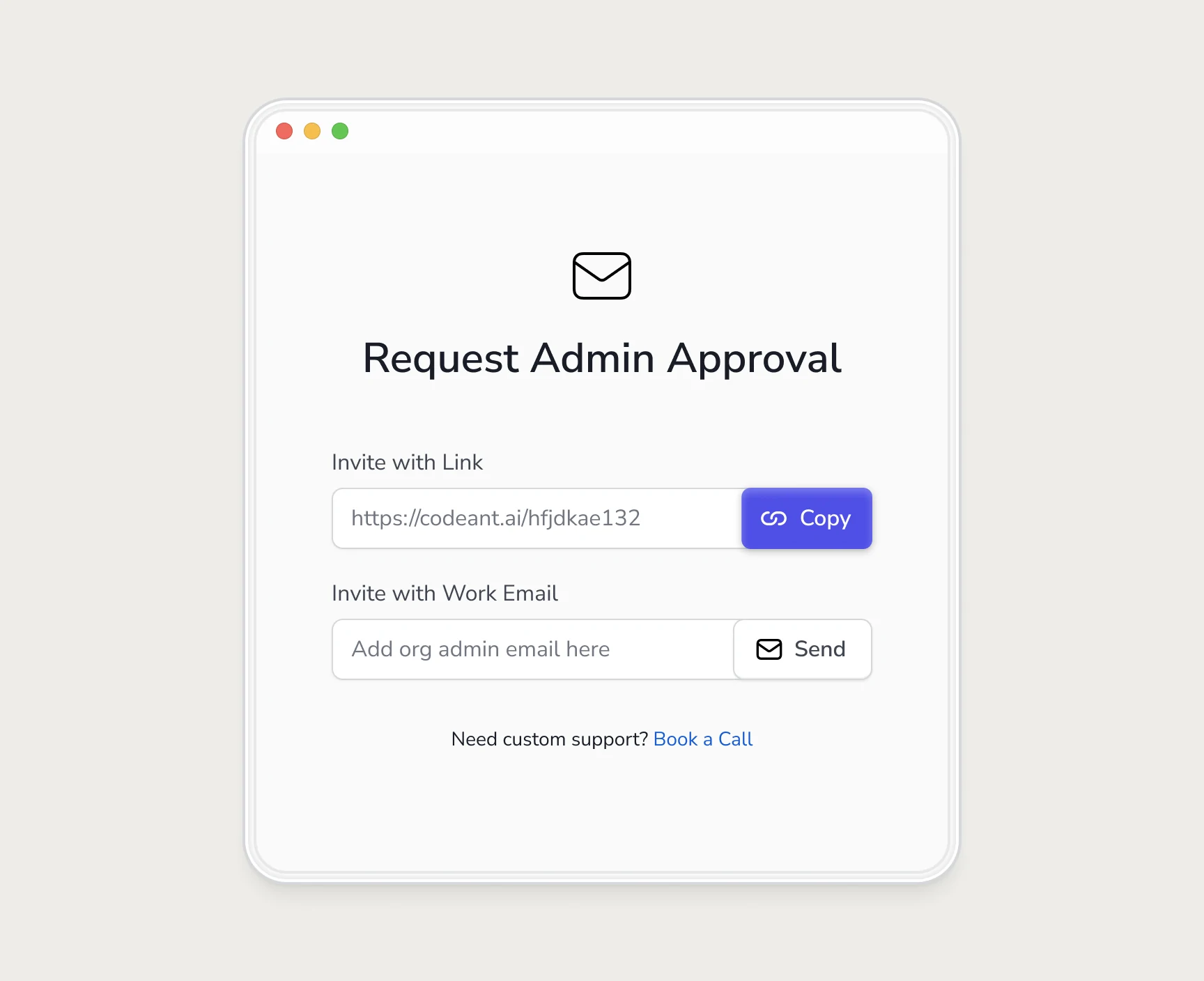
Doubling trial-to-paid at CodeAnt: The full story of that finding and the fixes that followed, with results.
Patterns I check in every SaaS onboarding audit
| Pattern | What it looks like | How I check for it |
|---|---|---|
| Wrong person in the flow | Users stall at a step that needs someone else's permission | Run the flow as a non-admin invited by a teammate, and as one who signed up alone |
| No defined first success | Users finish setup and don't know if it worked | Look at the screen right after the last setup step: does anything change? |
| Setup longer than it needs to be | Steps that exist because the backend needs them | Ask of each step whether the user needs it before their first result |
| The cost shows up too late | Users learn a rule after it has already cost them | Read setup-related support tickets for "I didn't know" |
| Dead-end errors | A failure message with no next action | Break the integration on purpose and read what the product says |
| Emails that ignore behaviour | Setup reminders sent to people who already finished | Sign up, finish setup on day one, and read what arrives on day three |
Which kind of help fits your funnel
- You don't know where signups stall: this audit.
- You already know the broken step: skip the audit and book a two to four week sprint on that flow.
- Onboarding keeps changing as the product grows: fractional design, so someone owns it every week.
- Very few people sign up at all: the problem sits before onboarding, in positioning or the website.
If you want a rough read before talking to anyone, the free onboarding scorecard takes about five minutes and points to your weakest stage. To start the audit, email work@utkarshdesign.com with a link to your product and roughly how many trials you get a month.
Questions people ask
How long does the onboarding audit take?
About two weeks from access to final review, assuming I get product access and data in the first two days.
How much does a SaaS onboarding audit cost?
My UX audits start from $900, and the final quote depends on how many user paths and integrations the flow has. Current starting prices are on the pricing page.
Do I need analytics set up first?
No. Funnel data makes the ranking sharper, but walking through as different user types and reading support tickets finds most issues on its own.
Can you implement the fixes afterwards?
I can design and test them with your engineers as a follow-on sprint. Many teams ship the quick wins from the fix list themselves.
Does it work for sales-led products?
Yes, as long as users set up something themselves after the contract. The admin-and-invite problem is often worse in sales-led tools.
Sources
- Installing a GitHub App from a third party, GitHub Docs
- Using Prioritization Matrices to Inform UX Decisions, Nielsen Norman Group
Start a project
Tell me what you're building and where it's stuck: book a 30-minute call, email work@utkarshdesign.com or send a brief.