Cybersecurity product and website design
Work · Updated
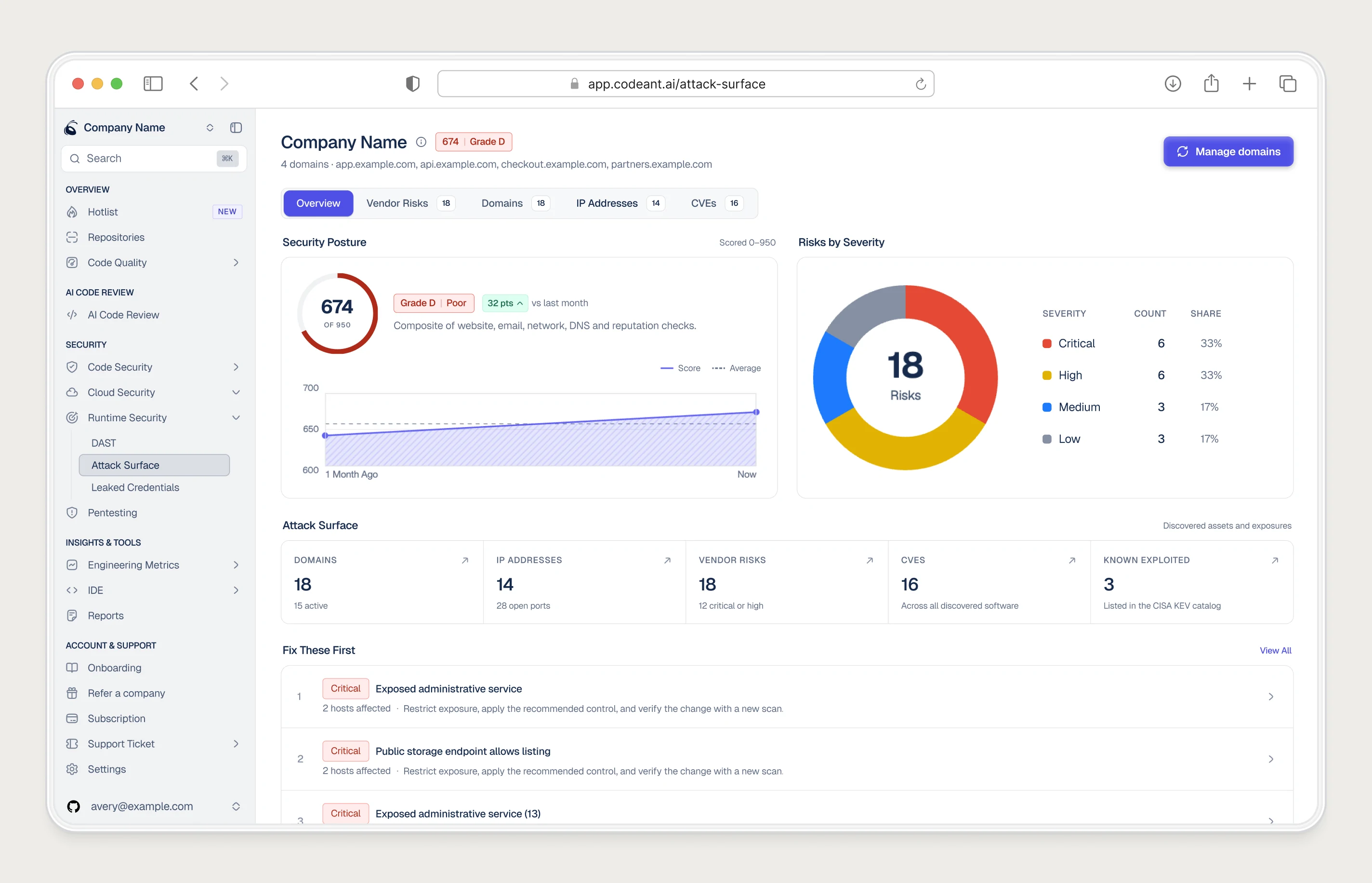
Good security product UX turns a pile of findings into a short, ordered list someone can act on today. At CodeAnt AI I design the security scanning, secret-leak and attack surface views, and I designed and built the website for Zania, an AI agent for security compliance.
Security screens are read under pressure
People judge a security tool on the day something leaks. Whoever opens it wants to know how bad it is, where it is and what to do first. A screen that opens on 400 findings of equal weight fails that test, however complete it is.
- Put the order before the volume. CodeAnt's attack surface view opens with a short Fix These First list next to the count.
- Use one severity scale across scans, secrets and code quality, or managers can't compare them.
- Treat a leaked secret as an incident, with its own state, an owner and a way to mark it rotated.
- Show the file, the line and the rule that fired. Developers will check the evidence, and then they can trust or dismiss the finding in one look.
At CodeAnt, putting code analysis and secret leaks into one manager dashboard cut org-level triage time by 35%. The security dashboard design guide goes through the layout decisions in more detail.
Security product work
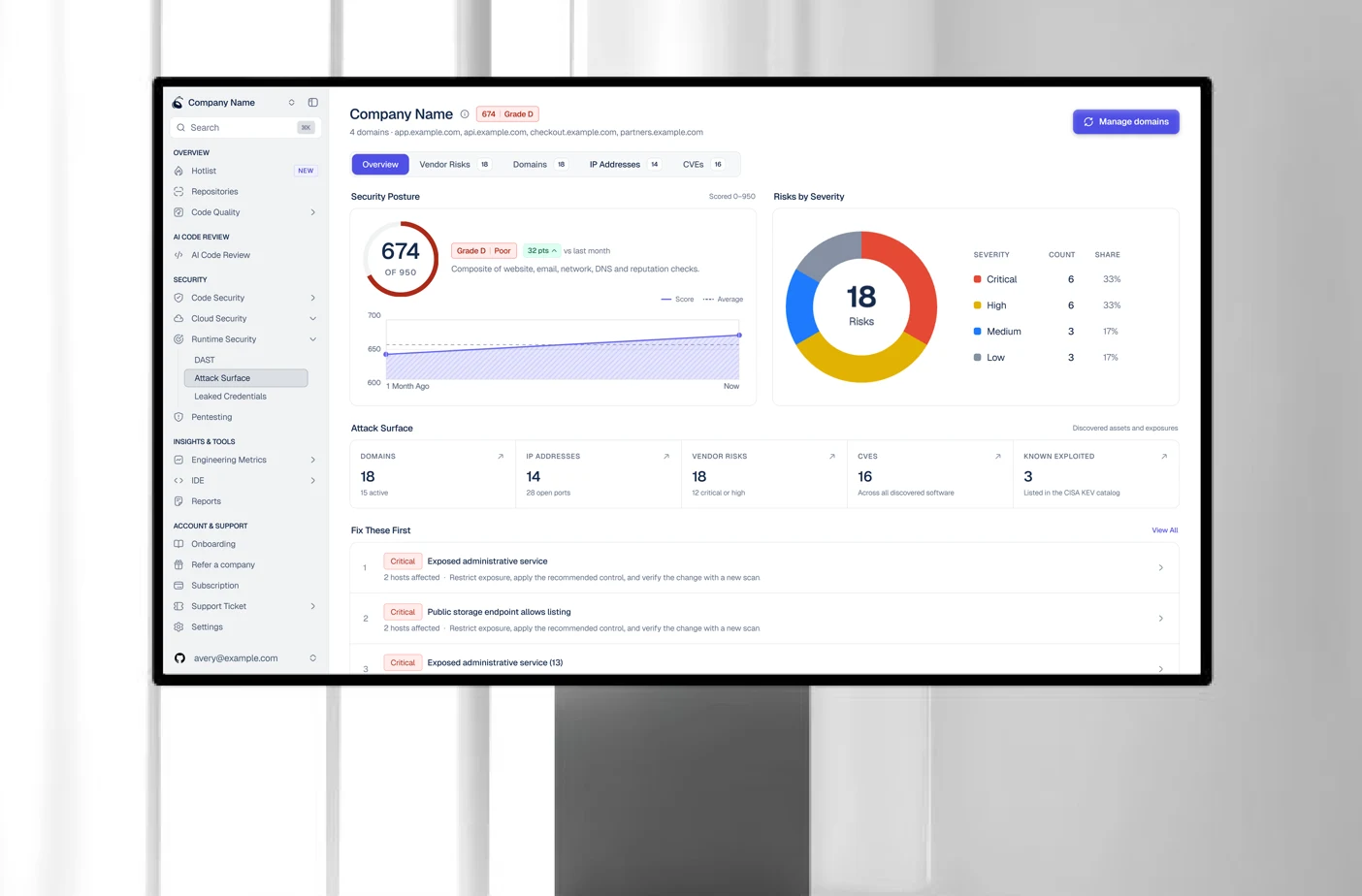 CodeAnt AI Dashboard: Designed product dashboard for AI code reviews, security scans and repo-level engineering insights
CodeAnt AI case study: Dashboards, onboarding and website for a code health and security platform used weekly by 40,000+ developers.
Cybersecurity website design: Zania
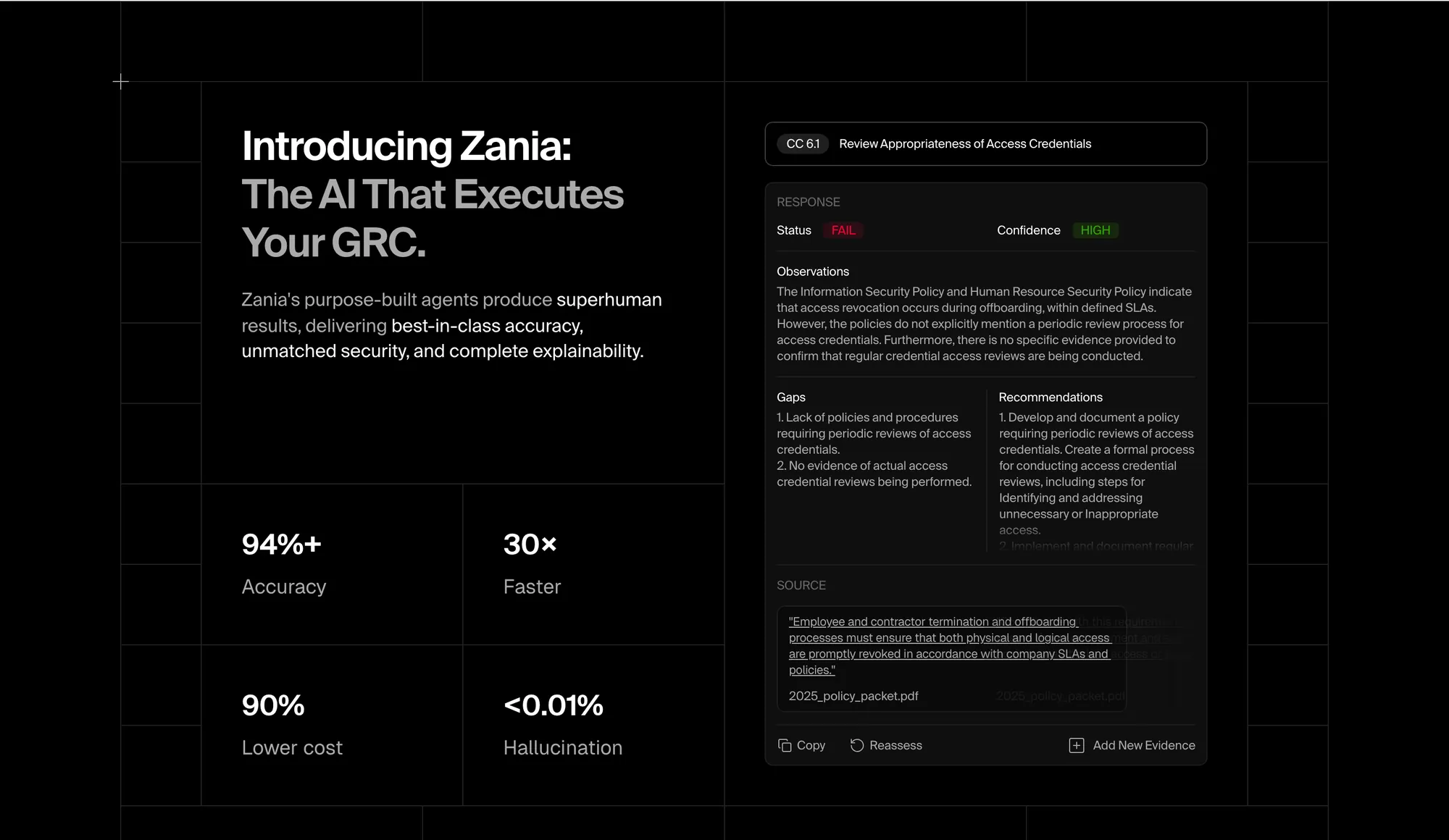
Zania sells an AI agent for governance, risk and compliance (GRC) work. I designed the structure and layouts of zania.ai around that positioning and built the site in Framer, from page structure to the production deploy.
A security website for a CISO or a compliance lead reads differently from one for developers. The buyer is careful by job description. So the page leads with what the AI does for compliance work and puts proof close to the claim. The product motion comes after that.
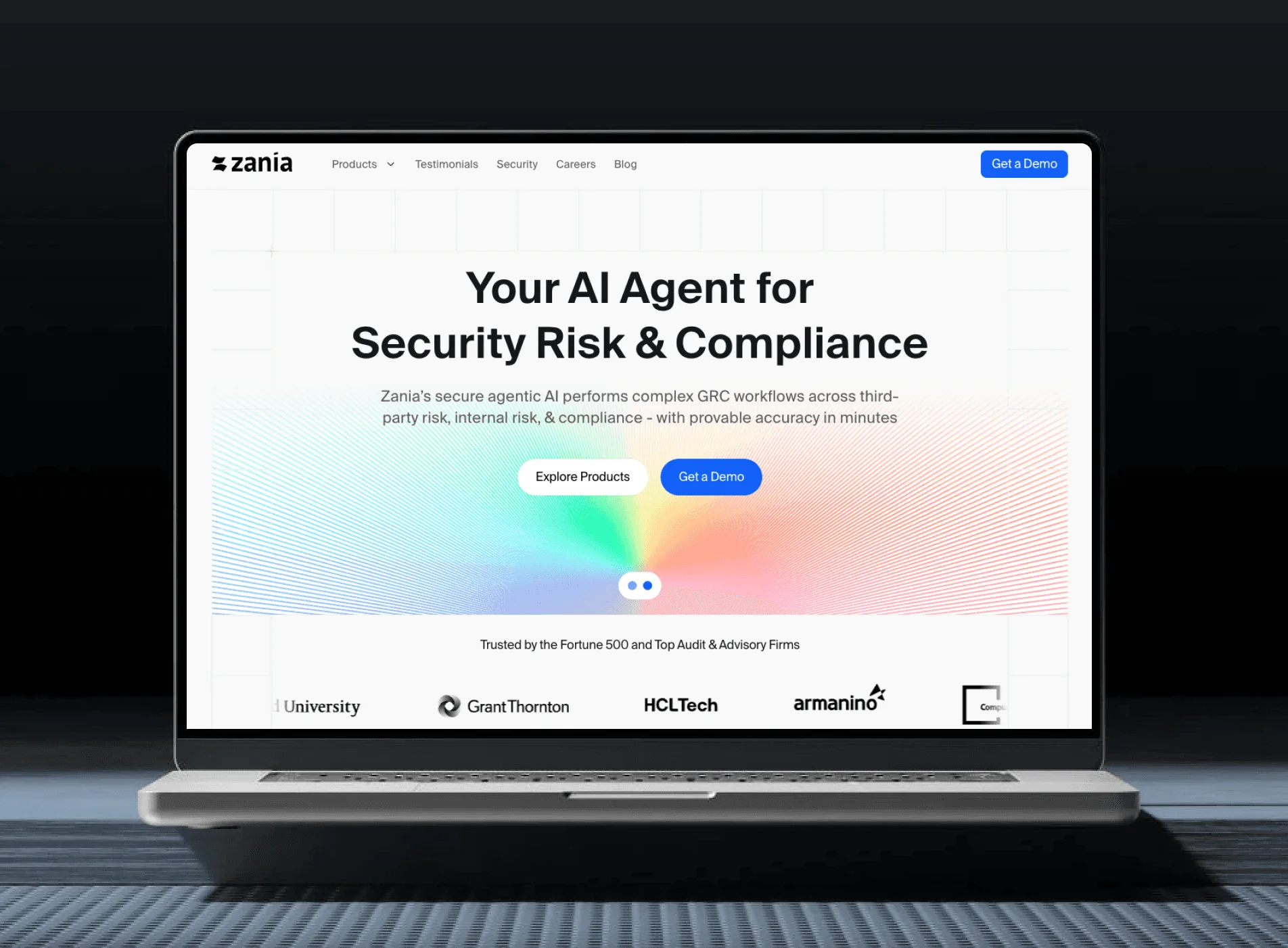 Zania Website: Designed and developed entire website in Framer, from structure to final production deployment
How a security UX project usually starts
- Read real findings: I start from a sample export of scan results and secret alerts, so the design fits your real volume and noise instead of a mock with five tidy rows.
- Name the decision per role: What a developer does with one finding, what a team lead does with a repo, what a manager does with the org. One dashboard rarely serves all three.
- Design the triage path: Summary, then an ordered list, then the evidence and the action. Each finding can be new, assigned, dismissed with a reason, or fixed.
Questions people ask
Do you design for SOC or incident-response teams?
My security work is application security for developers and engineering managers: code scans, secret leaks and attack surface. I haven't designed a SOC console, and I'd tell you so before scoping one.
Can you design a cybersecurity website as well as the product?
Yes. I designed CodeAnt's Framer website alongside its product, and I designed and built zania.ai in Framer end to end.
Do you know compliance frameworks like SOC 2?
I design the screens and pages around compliance work, as with Zania's GRC website. The control requirements themselves come from your compliance team, and I make sure they read clearly where users decide.
Start a project
Tell me what you're building and where it's stuck: book a 30-minute call, email work@utkarshdesign.com or send a brief.