Product designer vs UX designer vs UI designer
Guide · 6 min read · By Utkarsh Dhairya Panwar · Updated
A UX designer designs how a flow behaves, a UI designer decides how it looks, and a product designer does both while owning the outcome: which problem to solve, what to cut, whether the metric moved. Most early-stage startups need a product designer first, because nobody else owns those calls.
The three roles side by side
| UX designer | UI designer | Product designer | |
|---|---|---|---|
| Main question | Does the flow make sense and work for the user | Is it clear, consistent and good to look at | Is this the right problem, and did the fix work |
| Typical output | Flows, wireframes, usability tests, error states | Visual design, components, type, colour, motion | All of that, plus problem framing, scope calls and metrics |
| Works closest with | Researchers and PMs | Front-end engineers and brand | Founders, PMs, engineers, sometimes sales |
| Judged by | Task success, errors, drop-off | Consistency, polish, build accuracy | Activation, conversion, retention |
In practice the titles blur. Job posts use them interchangeably, and plenty of UX designers do visual work. What separates them is how much they own; the files they produce often look alike.
What a UX designer does, in practice
My internship at FamPay (YC S19) was a UX role, and it shows the scope well. I redesigned payment error states on iOS (timeout, bank decline, retry) and tested them with users. The problem was handed to me, and the job was to make that flow behave well. The details and results are in my guide to payment failure UX.
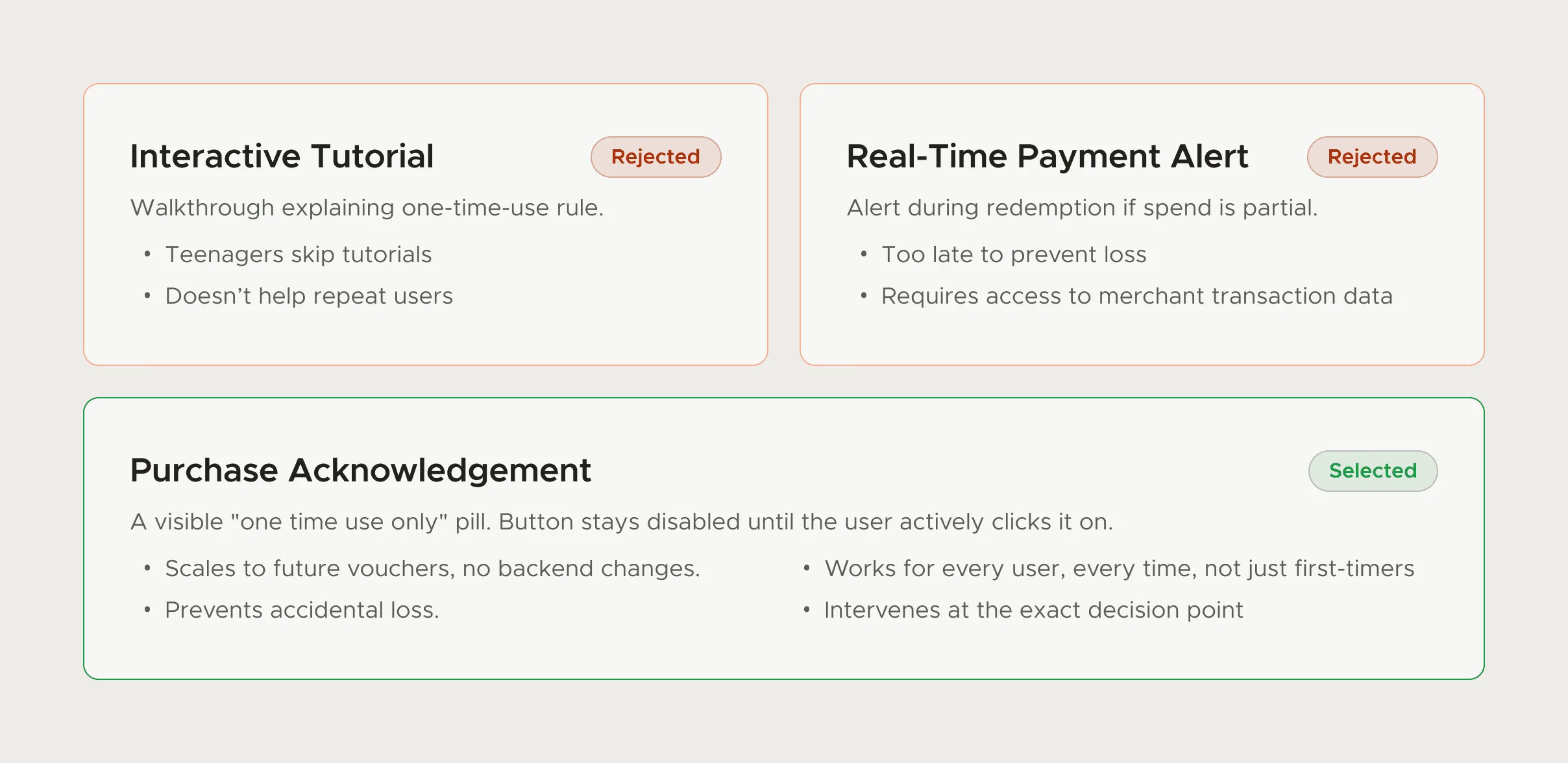
That's UX design done properly: deep on one flow, with evidence behind each change. The voucher work on FamPay's Cashback Store was the same kind of job, with options compared and rejected for stated reasons before anything was drawn in detail.
What a UI designer does
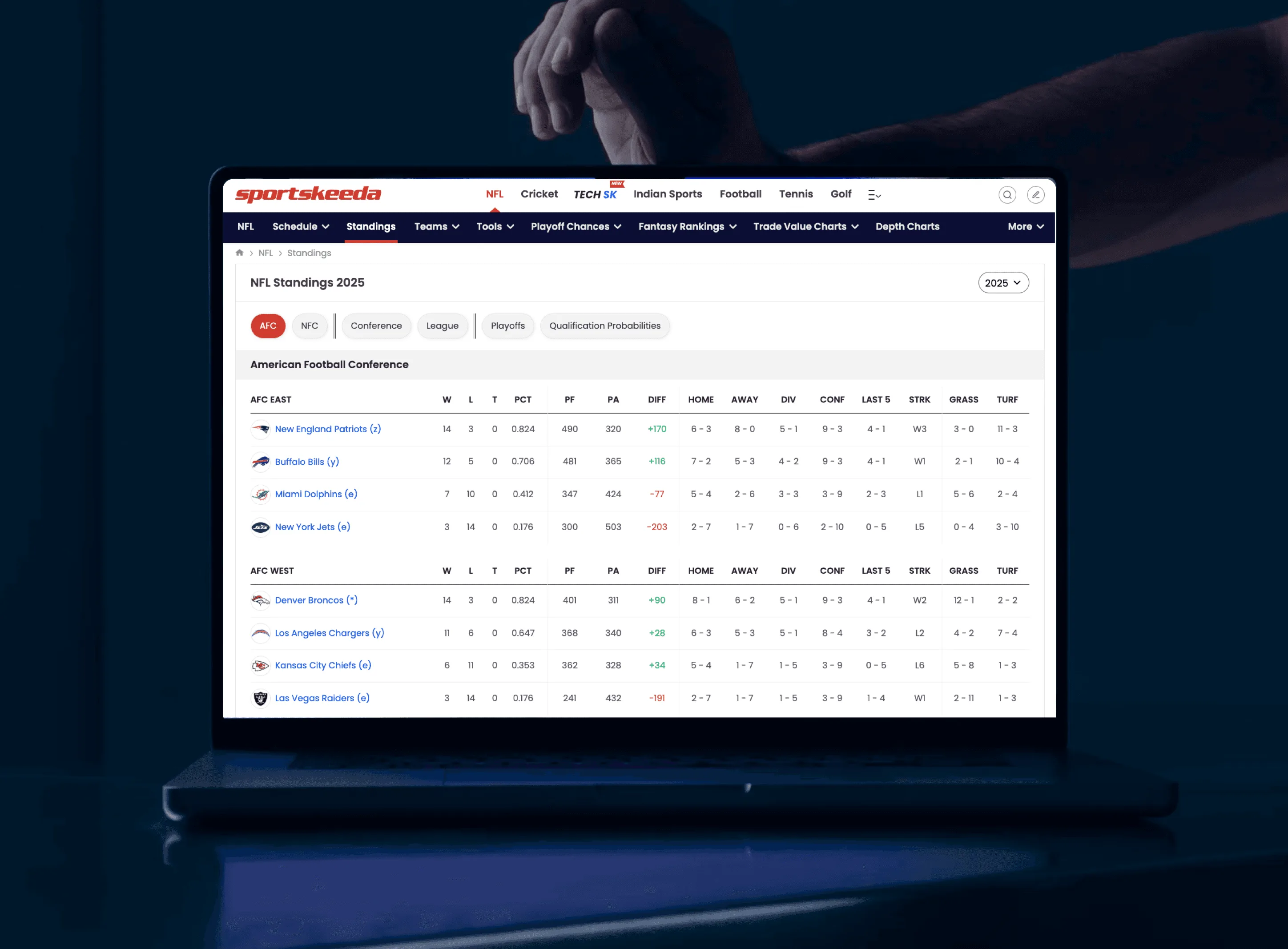
UI work is the visual and component layer: type scale, spacing, colour, and how every control looks in every state. On high-traffic pages it's also about density. At Sportskeeda I worked on NFL and IPL live-score pages read by 20M+ users a month, restructuring tables and menus so they scan faster, with simpler views for casual readers and more data for power users.
A strong UI designer is the right hire when the product already works and needs consistency, or when there's a design system to build. On their own, they're rarely the right first hire for a startup.
What a product designer does
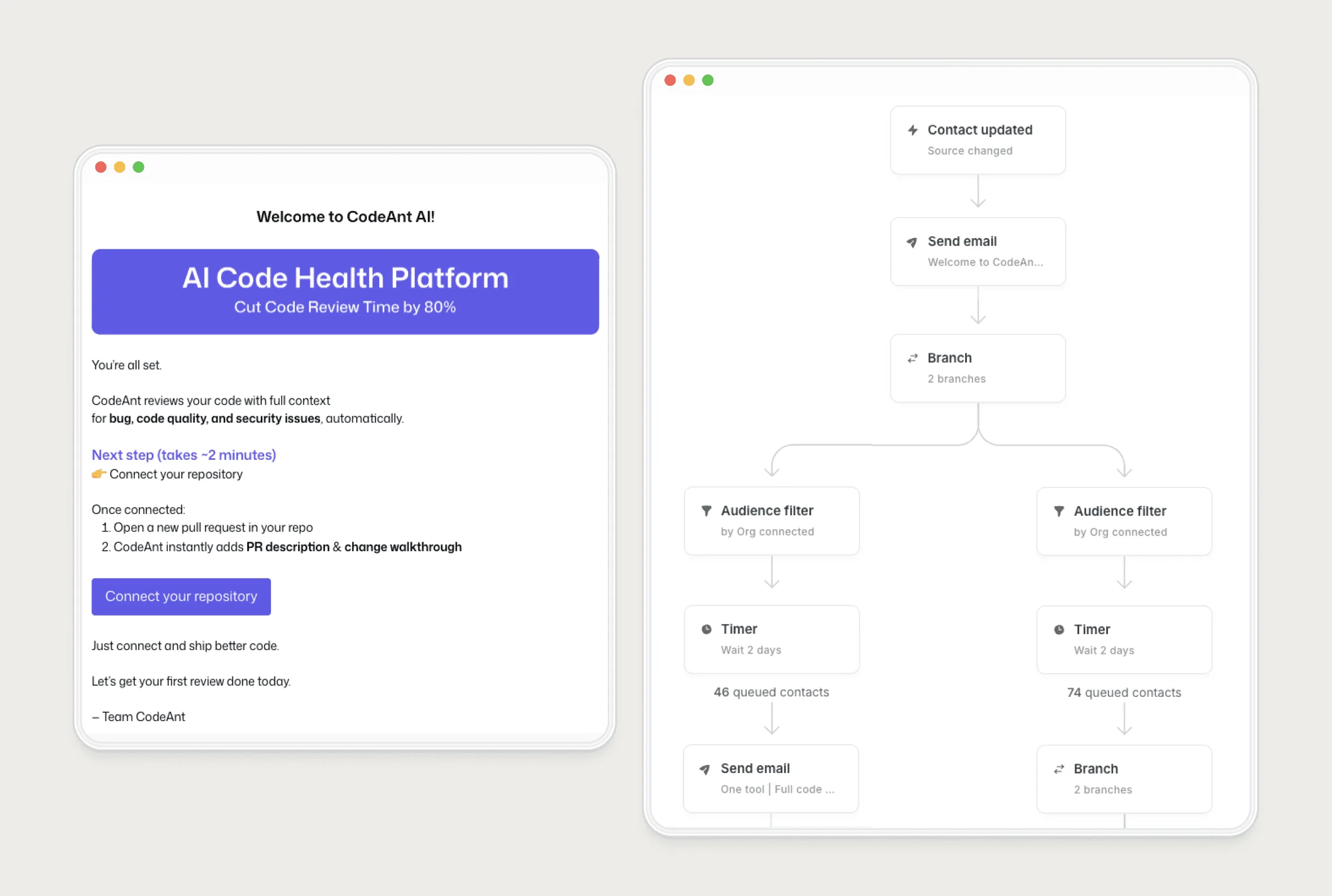
As founding designer at CodeAnt AI (YC W24) since June 2024, my scope is the product, the Framer website, the brand and the design system. Nobody hands me a flow to polish. When activation stalled, the work started with finding out why, and the answer was a permissions problem at one setup step. The full story is in the trial-to-paid guide.
The fix mixed all three jobs. Part of it was UX: a path for blocked users to bring in their admin. Part was UI: a Get Started screen pointing straight at each product line. And part was a product call: no guided tour, and emails triggered by what each user had and hadn't done instead of a fixed sequence. That mix is what the product designer title should mean.
Which one should a startup hire first
- Pre-seed to Series A with no designer: a product designer. You need someone who picks the problems as well as solving them.
- A product team that already has a design lead: a UX designer for flows that need research, or a UI designer for systems and polish.
- Only the marketing site needs work: a web designer who builds, usually in Framer or Webflow. It's a different skill that happens to share part of the title.
- Heavy research needs, such as healthcare or enterprise workflows: add a UX researcher before a second designer.
When a candidate calls themselves a product designer, ask which metric they owned. If they can't name one, they're probably a UX or UI designer with a newer title. That's fine, as long as you hire them for that job.
How to read a portfolio for each role
- UX: look for flows, edge cases and test findings alongside the final screens.
- UI: look for a component set shown in all its states. A single hero shot tells you very little.
- Product: look for the problem statement, what got cut, and a before-and-after number.
If you need one person to own product, website and brand together, the hire page explains how I work with startups, freelance or full-time.
Questions people ask
Is a product designer the same as a UX designer?
No. A UX designer focuses on how a flow works for users. A product designer covers UX and UI and also owns which problems get solved and whether the result moved a business metric.
Does a startup need a UX designer or a product designer?
Early-stage startups usually need a product designer, because nobody else owns design decisions. Specialist UX or UI designers make more sense once there's a design lead.
Do product designers do UI design?
At most startups, yes, including visual design and components. At larger companies the visual layer may sit with a separate UI or brand team.
What's the difference between a UI designer and a web designer?
A UI designer works on product interfaces and components. A web designer works on marketing sites and often builds them in Framer or Webflow. Many designers do both.
Sources
- What a UX Career Looks Like Today, Nielsen Norman Group
- The Definition of User Experience (UX), Nielsen Norman Group
Working on this?
Tell me what you're building and where it's stuck: book a 30-minute call, email work@utkarshdesign.com or send a brief.